GlobalFoundries Stock Rallies on $2 Billion TSMC Deal
GlobalFoundries shares climbed after the US chipmaker disclosed a $2 billion agreement with TSMC, the world's largest foundry; further terms are expected in subsequent regulatory filings.
- By
- Tom Whitfield
- Filed
- Channel
- Chip Manufacturing
- Read
- 3 min read
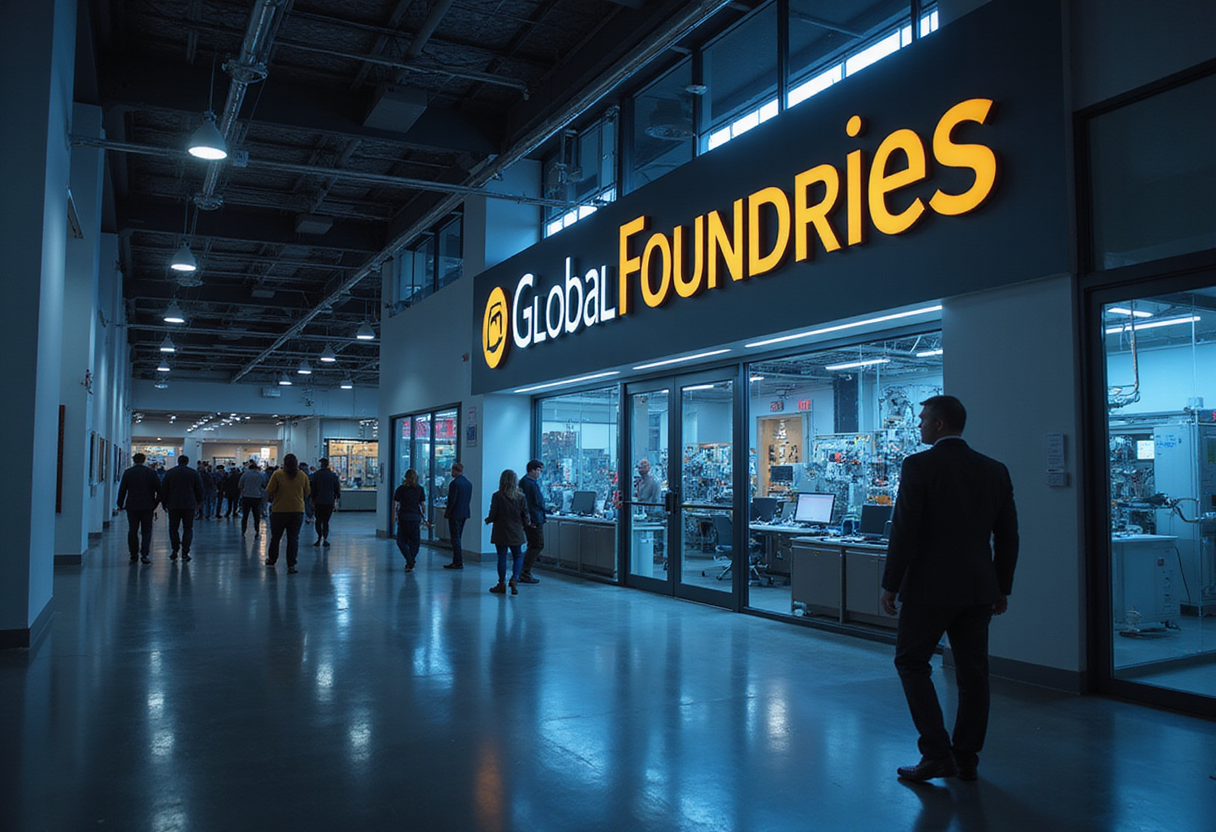
GlobalFoundries shares rose after the company announced a $2 billion agreement with Taiwan Semiconductor Manufacturing Company, the world's largest contract chipmaker.
The agreement, valued at $2 billion, marks one of the larger publicly confirmed cross-foundry arrangements in the current industry cycle. GlobalFoundries and TSMC both serve fabless semiconductor designers, yet they occupy distinct positions in the market. GlobalFoundries operates a global network of fabrication plants across the United States, Europe and Asia, with a process portfolio spanning mature and trailing-edge nodes. TSMC dominates leading-edge production and holds the bulk of advanced-node capacity worldwide.
What does the agreement cover?
The two companies have not yet publicly detailed the structure of the arrangement. Foundry-to-foundry deals typically fall into one of several categories: technology licensing, patent cross-licensing, capacity reservation, or joint development of process design kits. Each mechanism carries different commercial weight and would land differently with customers and competitors. The headline figure of $2 billion signals a substantial commitment, though the precise mechanism remains to be confirmed in subsequent disclosures.
GlobalFoundries and TSMC are not strangers to cooperation. The two companies have shared customers in communications, automotive and industrial segments for years, and occasional technical overlap has placed them on competing bids for the same socket designs. A direct agreement of this size points to deeper alignment on technology, capacity, or both.
Why did the stock move?
Shares of GlobalFoundries climbed in the session that followed the announcement. The market reaction reflects investor revaluation of the company's strategic position relative to its larger Taiwanese rival. A $2 billion agreement with TSMC materially exceeds the size of any commercial arrangement GlobalFoundries has previously disclosed with a peer foundry, and the headline figure alone is enough to draw fresh analyst attention.
Stock reactions to foundry deal announcements typically discount three elements: customer commitment, technology validation, and competitive signaling. The $2 billion figure contains elements of each, which explains the broad buying interest that lifted GlobalFoundries shares on the news.
What is the commercial context?
The chip foundry industry has spent the past several years adjusting to capacity shortages, US export controls on advanced lithography equipment, and the geographic diversification of semiconductor manufacturing. The CHIPS and Science Act has directed tens of billions of dollars toward domestic fab construction in the United States, with GlobalFoundries among the recipients. TSMC has concurrently expanded its presence in Arizona, a project that has drawn sustained investor scrutiny over cost and schedule.
A direct commercial agreement between the two foundries may help both companies address capacity bottlenecks at nodes where customer demand exceeds supply. The agreement arrives against a backdrop of rising demand for automotive chips, artificial intelligence accelerators and high-performance computing processors, all of which require the mature and trailing-edge nodes where GlobalFoundries focuses alongside the leading-edge production that TSMC dominates.
What comes next?
Further disclosure will determine whether the market treats the $2 billion agreement as a one-time event or the foundation of a longer collaboration. Subsequent regulatory filings, quarterly earnings calls, and joint customer announcements will clarify the mechanism behind the deal and the timetable for its commercial effect. The headline figure anchors the conversation today, and the stock reaction confirms that investors view the agreement as a meaningful commercial event rather than a routine disclosure.
Source: Google News: TSMC
More from Tom Whitfield
Show full bio
Staff writer covering companies, deals and strategy in Semiconductors, chip manufacturing, hardware, AI compute at Chip Dispatch.
419 articles
Related articles
globalfoundries-stock-rallies-on-2-billion-tsmc-agreement-0bce6f41
GlobalFoundries Stock Rallies on $2 Billion TSMC Agreement
globalfoundries-tsmc-sign-2-billion-silicon-supply-deal-5fbca4df
GlobalFoundries, TSMC Sign $2 Billion Silicon Supply Deal
tsmc-taps-globalfoundries-for-2b-ai-chip-production-deal-df55033f
TSMC Taps GlobalFoundries for $2B AI Chip Production Deal
tsmc-signs-2-billion-u-s-chip-deal-with-globalfoundries-9deada08
TSMC Signs $2 Billion U.S. Chip Deal With GlobalFoundries