Japan and U.S. Advance $550 Billion Investment Pact Centered on AI and Chips
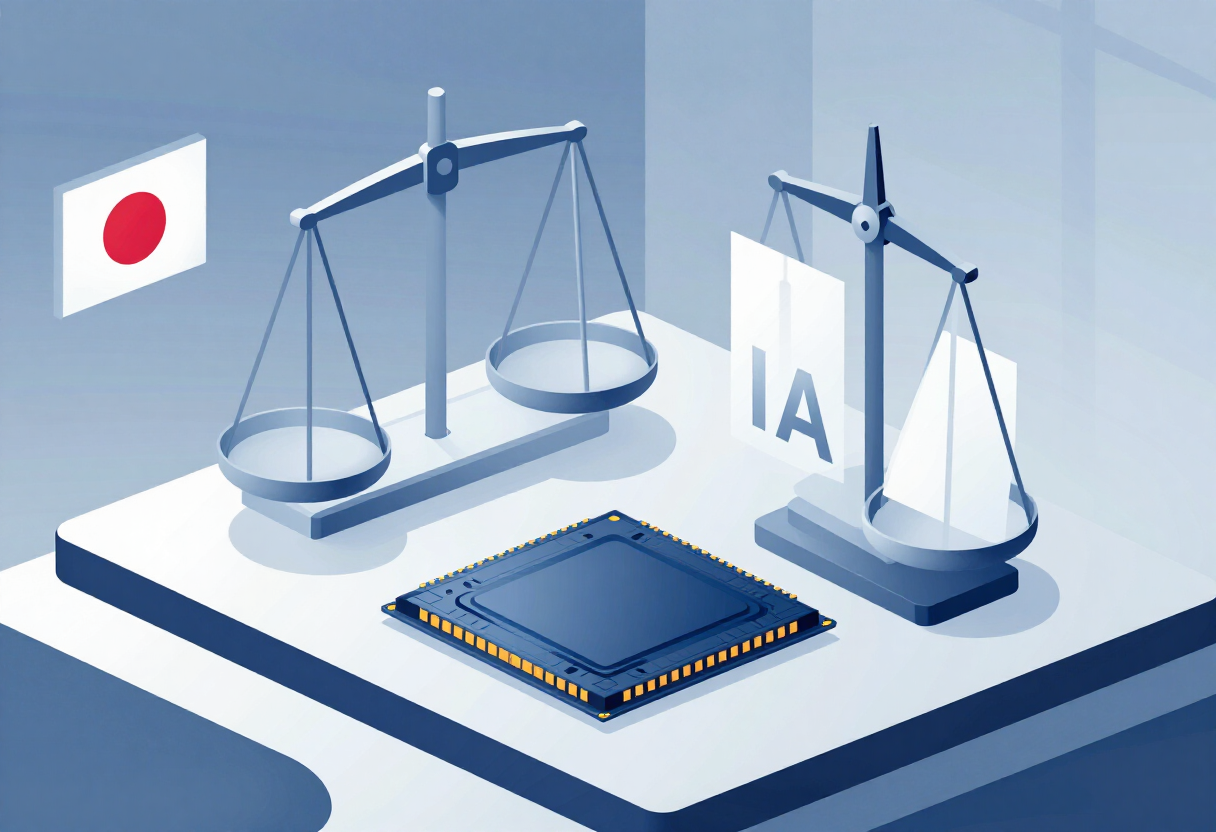
Japan and the United States are advancing a $550 billion investment pact with artificial intelligence and semiconductors at the core of the bilateral economic agenda.
- By
- Grace Kim
- Filed
- Channel
- Chips & Policy
- Read
- 2 min read
Japan and the United States are advancing a $550 billion investment pact that puts artificial intelligence and semiconductors at the center of bilateral economic ties. The figure, confirmed in reporting by Yahoo Finance, marks one of the largest investment frameworks the two governments have pursued together.
The deal is still in motion. Officials have not announced a final signing date or a complete breakdown of the $550 billion total. What is clear is the priority order: AI and chips lead the agenda.
What does the pact cover?
The framework links Japanese capital to U.S. industrial policy priorities. AI infrastructure and semiconductor supply chains dominate the discussion. Both governments treat chips as a strategic asset, not merely a trade category.
Washington has spent three years pushing allies toward domestic fabrication capacity through subsidies and export controls. Tokyo has moved in parallel, backing advanced-node production at home and pressing Japanese firms to invest abroad. A pact of this size gives both sides a single structure for those efforts.
How does it fit the semiconductor picture?
Japan hosts major equipment and materials suppliers central to global chipmaking. The United States hosts leading-edge design and a growing fabrication base. An investment channel between the two economies targets the weakest links in the AI supply chain: advanced logic capacity, memory, packaging and the tooling that feeds them.
The $550 billion headline is an investment commitment, not a government appropriation. The figure presumably bundles corporate capital plans with policy support, a structure used in similar U.S. agreements with other partners. A detailed allocation between AI infrastructure and chip manufacturing has not been published.
Why now?
AI demand has strained every segment of the semiconductor supply chain. Governments have responded with money. A bilateral pact of this scale signals that Japan and the United States intend to coordinate that spending rather than compete for the same projects.
The timing also reflects geopolitics. Both countries seek to reduce dependence on chip supply concentrated in East Asia. Investment commitments tied to AI and semiconductors serve that goal directly.
What remains unresolved?
Key questions stay open:
- How the $550 billion splits between AI infrastructure and semiconductor manufacturing
- Which companies commit capital and in which facilities
- Whether the pact includes binding timelines or aspirational targets
- The role of Japanese equipment and materials firms in U.S. fabs
Officials on both sides continue to negotiate terms. No cabinet-level signing has been announced.
What comes next?
The pact advances against a backdrop of record AI-driven capital spending across the industry. If Japan and the United States convert the framework into signed projects with named fabs and capacity targets, the agreement could reshape investment flows in advanced logic and AI infrastructure for the rest of the decade.
Source: Google News: chip factory investment
More from Grace Kim
Show full bio
Market editor covering people, launches and day-to-day practice in Semiconductors, chip manufacturing, hardware, AI compute at Chip Dispatch.
417 articles
Related articles
japan-and-us-weigh-19-billion-chip-plant-in-tariff-investment-pact-8dcdcf17
Japan and US Weigh $19 Billion Chip Plant in Tariff Investment Pact
japan-and-us-in-talks-over-chip-fab-under-550-billion-investment-plan-a855977a
Japan and US in Talks Over Chip Fab Under $550 Billion Investment Plan
india-japan-expand-high-tech-cooperation-in-semiconductors-and-space-db98a68c
India, Japan Expand High-Tech Cooperation In Semiconductors And Space
straits-times-maps-five-fronts-in-the-us-china-ai-standoff-a70fe45b
Straits Times Maps Five Fronts in the US-China AI Standoff