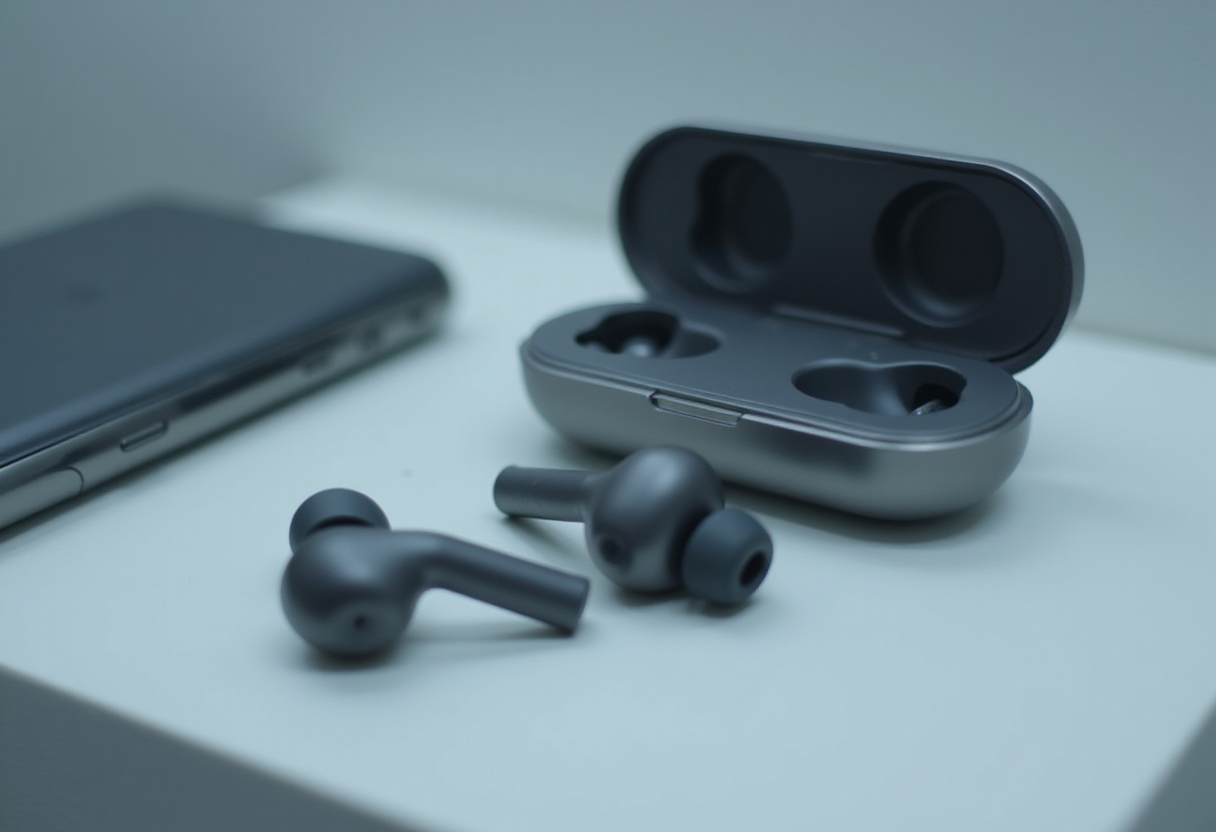
Samsung's Galaxy SmartTag 3 Trades Keyring Hole for Battery Life
Samsung's SmartTag 3 shrinks into a squircle, drops the keyring cutout, improves battery life, and adds cross-OS tracking shared with iPhone users.
- By
- Grace Kim
- Filed
- Channel
- Consumer Tech
- Read
- 3 min read
Samsung has announced its third-generation Bluetooth tracker, the Galaxy SmartTag 3, and the headline numbers sit in the physical spec sheet rather than the wireless one: a smaller body, improved battery life, and an IP67 rating for dust and water protection.
The most consequential design decision is also the most divisive. The SmartTag 3 adopts a squircle shape, echoing the original SmartTag from 2021, but it drops the cutout for a key ring that earlier models carried. Buyers who want to attach the tracker directly to keys or a carabiner will need to purchase one of Samsung's protective cases — an accessory cost layered on top of the tracker itself. The squircle form factor did not arrive as a surprise; leaks had already revealed the shape ahead of the announcement.
The removal of the keyring hole is the kind of trade-off that hardware teams make when shrinking a device's footprint. Every millimeter of removed material frees volume for the battery, and Samsung says battery life is improved in this generation. The company did not publish exact runtime figures in the announcement, so precise comparisons with the SmartTag 2 remain unavailable until fuller specifications surface.
On the software side, Samsung has added new tracking features, including cross-OS support intended to make it easier to share tracking information with friends and family. That is a meaningful shift for a device family that has historically lived inside the Galaxy ecosystem. If a family mixes Android phones and iPhones, the tracker's location data can now move between them, rather than forcing every household member onto the same platform to follow a shared item — a luggage tag, a pet, a car parked at the airport.
The competitive context matters here. Samsung is chasing Apple's AirTag, whose Find My network benefits from the enormous installed base of iPhones worldwide. Cross-OS sharing is one of the few levers a Galaxy-centric accessory can pull to widen its addressable audience beyond Samsung handset owners. By opening the sharing path to iPhones, Samsung positions the SmartTag 3 as a household item rather than a single-user accessory tied to one brand of phone.
The IP67 rating deserves attention too. It means the tracker withstands dust ingress and immersion in up to one meter of fresh water for 30 minutes — the standard that has become table stakes for small battery-powered trackers that get clipped to bags, buried in luggage, or left in coat pockets through rain. Ruggedization plus longer battery life in a smaller shell points to improved internal packaging: tighter board layout, a higher-density cell, or both.
What Samsung has not yet detailed is pricing and full availability, which The Verge notes in its fuller coverage of the announcement. The SmartTag line has historically competed on price against both Apple's AirTag and third-party trackers from the likes of Tile, so the absence of a confirmed price leaves the commercial picture incomplete. The protective-case requirement adds a hidden cost that will factor into value comparisons at retail.
For the tracker market, the SmartTag 3's significance rests on three axes: whether the smaller, battery-focused redesign delivers a runtime that meaningfully beats its predecessor, whether cross-OS sharing pulls iPhone-owning family members into Samsung's finding network, and how the total cost of ownership — tracker plus case — stacks up against rivals that keep their attachment loops built in.
Samsung has committed to the form factor change despite the accessory dependency it creates, a signal that the company sees size and battery endurance as the stronger selling points. Whether buyers agree will show up in how quickly the protective cases move alongside the trackers when the SmartTag 3 reaches shelves.
Until Samsung publishes pricing, regional availability, and battery-life specifics, the announcement stands as a confirmed industrial redesign with a software story attached — and an open question on cost that the market will answer at checkout.
Original: platform.theverge.com
More from Grace Kim
Show full bio
Market editor covering industry trends and analytics at Chip Dispatch.
97 articles
Related articles
google-prices-fitbit-air-at-13-999-in-india-47-above-us-price-b6034f97
Google Prices Fitbit Air at ₹13,999 in India — 47% Above US Price
fairphone-confirms-fairbuds-2-launch-for-october-14th-3c4fb7df
Fairphone Confirms Fairbuds 2 Launch for October 14th
samsung-electro-mechanics-6-78-trillion-won-buildout-draws-customer-backing-46af6b69
Samsung Electro-Mechanics' 6.78 Trillion Won Buildout Draws Customer Backing
samsung-s-2nm-yield-nears-60-bolstered-by-tesla-orders-7e6daf3d
Samsung's 2nm Yield Nears 60%, Bolstered by Tesla Orders