Applied Materials Commits $5 Billion to Silicon Valley R&D Hub
Applied Materials will invest $5 billion in a Silicon Valley 'Epic Center' to accelerate semiconductor innovation for the AI era, the largest such R&D commitment in its history.
- By
- Grace Kim
- Filed
- Channel
- Chip Manufacturing
- Read
- 3 min read
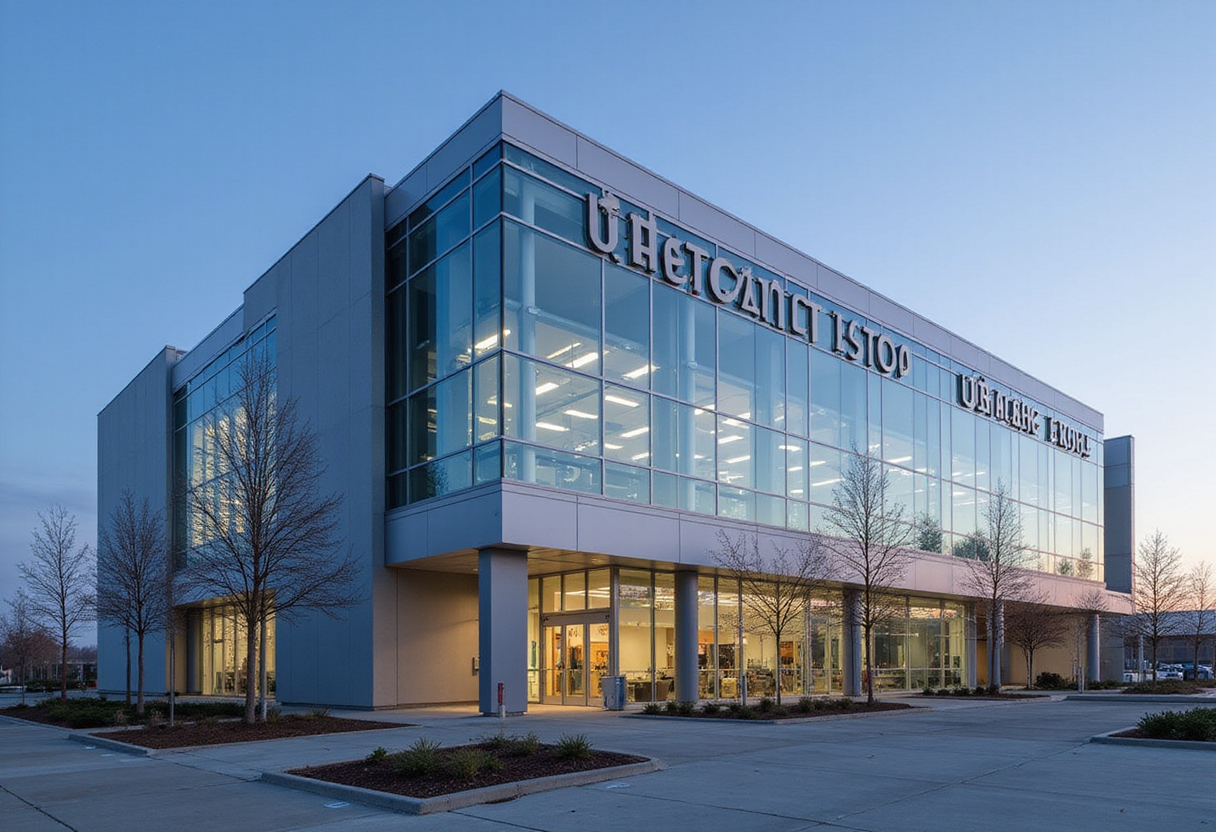
Applied Materials will spend $5 billion on a new research and development complex in Silicon Valley, a figure that ranks among the largest single facility investments ever announced by a semiconductor equipment supplier.
The company calls the campus the "Epic Center." It is designed to accelerate semiconductor innovation for what Applied Materials describes as the AI era, bringing together chipmakers, suppliers and researchers under one roof.
By Grace Kim, Chip Dispatch
The announcement signals where the world's largest supplier of wafer fabrication equipment sees demand heading. Artificial intelligence workloads are driving record capital spending on advanced logic and memory, and equipment vendors are positioning themselves closer to their customers' development roadmaps.
What is the Epic Center?
The $5 billion facility will serve as a central hub for semiconductor research in Silicon Valley. Applied Materials unveiled the project under the title "Applied Materials Unveils $5 Billion Epic Center In Silicon Valley To Accelerate Semiconductor Innovation For AI Era." The company frames the site as a place where the industry can converge to shorten development cycles.
Applied Materials supplies the deposition, etch and inspection tools that fabs such as TSMC, Samsung and Intel depend on to build leading-edge chips. A dedicated innovation campus keeps the equipment maker embedded in the earliest stages of process development, where tool decisions are made years before volume production begins.
The investment lands at a moment when AI accelerators are reshaping the equipment market. GPUs and custom AI silicon push chipmakers toward larger die sizes, advanced packaging and new materials, all of which expand the tools and process steps each wafer requires.
Why does the location matter?
Silicon Valley remains the historical center of semiconductor toolmaking and process research, even as leading-edge fabs have concentrated in Taiwan, South Korea and the United States Southwest. Placing a $5 billion facility there reinforces the region's role in upstream innovation rather than volume manufacturing.
The move also aligns with U.S. policy currents. Washington has spent the past several years pushing to expand domestic semiconductor capability through incentives and supply chain reshoring, and large domestic R&D commitments from major suppliers strengthen that position commercially and politically.
What does it mean for the market?
For Applied Materials, the Epic Center is a defensive and offensive play at once. It deepens collaboration with customers at a time when process complexity — gate-all-around transistors, backside power delivery and advanced packaging — multiplies the number of steps where its tools can win share.
Analysts broadly expect AI-related capital expenditure to keep lifting the equipment segment through the decade, though individual company forecasts vary and Applied Materials has not tied the new facility to a specific revenue target. The company presents the $5 billion commitment as an infrastructure investment in long-term innovation capacity.
Rivals such as ASML, Lam Research and Tokyo Electron are competing for the same advanced-node tool budgets, and proximity to customer engineering teams has become a genuine commercial advantage in that contest.
The Epic Center will anchor Applied Materials' research operations in Silicon Valley for years to come, and its impact on equipment development cycles should become visible as AI-driven process nodes move toward volume production.
Source: Google News: semiconductors
More from Grace Kim
Show full bio
Market editor covering people, launches and day-to-day practice in Semiconductors, chip manufacturing, hardware, AI compute at Chip Dispatch.
376 articles
Related articles
applied-materials-commits-5-billion-to-epic-center-in-silicon-valley-606a1ebf
Applied Materials Commits $5 Billion to EPIC Center in Silicon Valley
intel-and-tsmc-share-r-d-floor-at-applied-materials-epic-center-bad5eb1b
Intel and TSMC Share R&D Floor at Applied Materials EPIC Center
ucla-samueli-joins-applied-materials-epic-center-for-chip-r-d-f807cd4d
UCLA Samueli Joins Applied Materials' EPIC Center for Chip R&D
applied-materials-puts-5-billion-into-silicon-valley-r-d-1545cc06
Applied Materials Puts $5 Billion Into Silicon Valley R&D