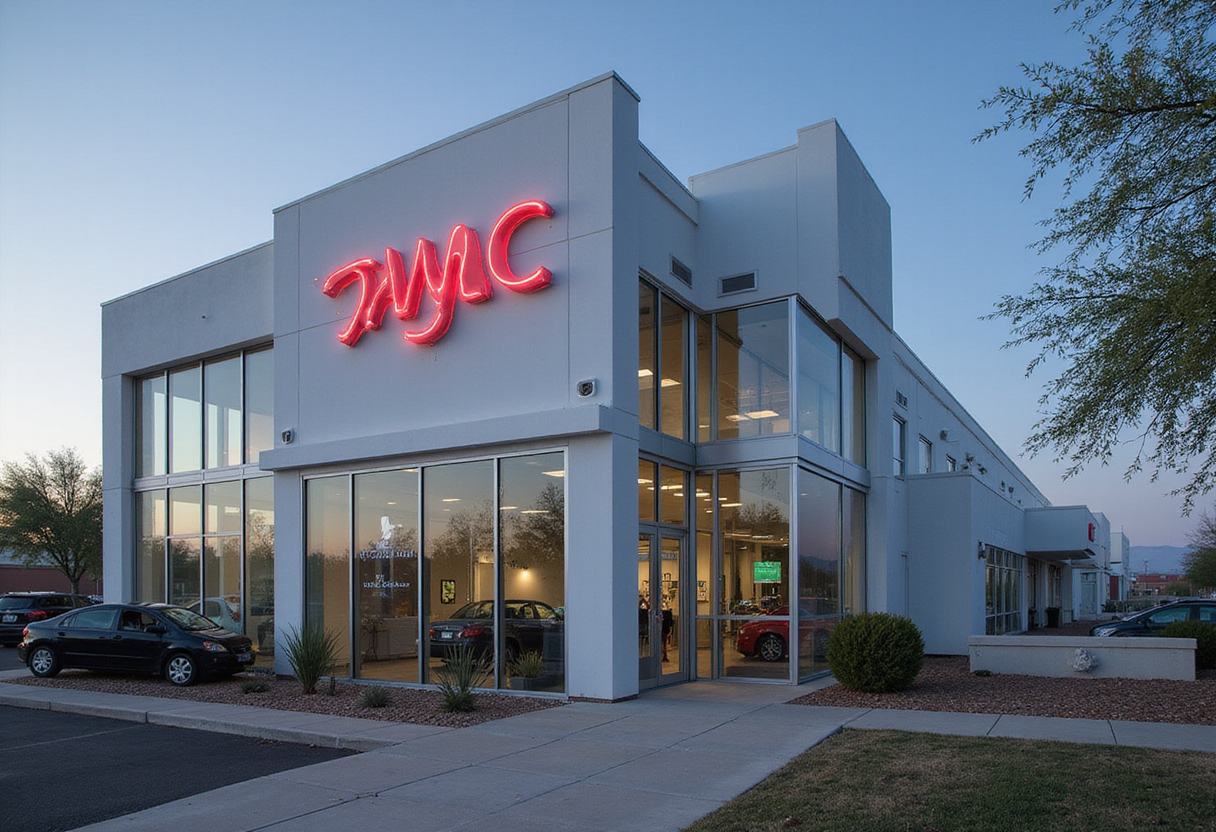
Shuttered Eugene Chip Plant Returns to Market as Redevelopment Plans Stall
A shuttered Eugene, Oregon semiconductor factory is up for sale again after its latest redevelopment plan stalled, testing the market value of aging US fab sites.
- By
- Tom Whitfield
- Filed
- Channel
- Chip Manufacturing
- Read
- 3 min read
A shuttered semiconductor factory in Eugene, Oregon, is back on the market after its most recent reuse plan stalled, giving chip-sector buyers a rare look at an established industrial site in a state that has spent years trying to rebuild its share of American fab investment.
The facility closed some time ago and has since cycled through a series of proposed second lives, none of which reached completion. Its return to the sales market confirms that the latest of those plans has also failed to advance. In plain terms: the building is empty, the plans are dead, and the site is once again for sale.
Why does a shuttered fab still matter?
A closed chip plant is not ordinary real estate. Fabs carry heavy infrastructure — reinforced floors, process exhaust systems, large power feeds, water handling and cleanroom shells — that costs tens of millions of dollars to build new but can be difficult to repurpose. That mix cuts two ways.
For a buyer in electronics, advanced packaging, materials or research-scale manufacturing, an existing shell can shorten construction timelines by years. For anyone outside the sector, the specialized infrastructure is often a liability, and demolition or retrofit costs push the price down. The sale price and the identity of the eventual buyer will therefore say a great deal about how the market currently values aging US fab real estate.
The takeaway: this listing is a live test of what second-hand semiconductor infrastructure is worth in the current investment cycle.
What does the stalled plan tell us?
Repeated failed reuse attempts at a single site usually point to structural problems rather than bad luck. The building's age, its configuration, local permitting friction or the economics of the Portland-adjacent market may all play a part.
Oregon occupies an awkward position in the national chip build-out. The state hosts major Intel operations and a deep supplier base, but most of the new US fab construction tied to federal incentives has flowed to Arizona, Ohio, Texas and Idaho. Eugene, two hours south of the Portland cluster, sits outside the main gravitational pull of that spending.
That geography matters for the sale. A site that cannot easily plug into a large existing fab cluster must compete on price, and each failed plan weakens the seller's hand.
The takeaway: location economics, not the building alone, likely explains why plans keep stalling.
Who might buy it?
The plausible buyer pool is narrow but real. Candidates typically include:
- Specialty semiconductor or packaging firms seeking cheap shell space
- Research institutions or universities needing pilot-line capacity
- Industrial users willing to strip the cleanroom and use the structure
- Public or quasi-public economic development bodies aiming to preserve the site for future chip use
Each path implies a very different outcome for the local economy, from high-skill manufacturing jobs to generic warehousing.
What happens next?
The property's agents will now seek a new round of offers, and the outcome will hinge on whether the current push for domestic semiconductor capacity has widened the pool of buyers willing to take on an older plant. If Washington incentive money and reshoring demand have made second-hand fab space attractive, this listing should move faster than the last attempt. If it stalls again, that will be evidence that even well-located legacy sites are falling out of the usable infrastructure base. The next sale, when it comes, will show whether Oregon's idle fab stock is an asset or a write-off.
Source: Google News: semiconductors
More from Tom Whitfield
Show full bio
Staff writer covering companies, deals and strategy in Semiconductors, chip manufacturing, hardware, AI compute at Chip Dispatch.
386 articles
Related articles
over-630bn-in-us-chip-megaprojects-race-to-break-ground-before-chips-deadline-6a329daa
Over $630bn in US Chip Megaprojects Race to Break Ground Before CHIPS Deadline
developer-pays-67-million-for-north-phoenix-auto-mall-near-tsmc-6ca33e2b
Developer Pays $67 Million for North Phoenix Auto Mall Near TSMC
micron-pours-first-concrete-at-new-york-fab-site-2b049620
Micron Pours First Concrete at New York Fab Site
tsmc-puts-another-100-billion-behind-arizona-fab-expansion-d48e91e0
TSMC Puts Another $100 Billion Behind Arizona Fab Expansion